Ever woken up at 3am to a mysterious drip-drip only to realize your house has been secretly siphoning water all night? Trust me, Kenmore homeowners, leaks are the sneaky party crashers of home maintenance. Even a tiny, unnoticed leak can balloon into a massive mess – think flood damage, moldy walls, and sky-high water bills. In humid Kenmore (hello, summer storms!), hidden leaks love to hide in walls, under floors or outside irrigation systems. That’s where Leak Detection Specialists Kenmore come in.
These plumbing detectives use high-tech gear – acoustic sensors and thermal cameras – to find leaks fast, saving you money and headaches. In this guide, I’ll walk you through everything from spotting the sneaky signs of a leak to pro tips on preventing one. You’ll learn exactly when to tackle leaks yourself and when to call in the Leak Detection Specialists Kenmore pros. Consider it a heart-to-heart over coffee about how to keep your home dry, your meter low, and your mind at ease.
Spotting the Sneaky Leaks
Before the specialists roll in, you can play leak detective too. Keep an eye (and ear) out for common clues: an unexpectedly high water bill, wet spots on walls or ceilings, mysterious musty smells, or even lush, unnaturally green patches in your yard. Your eyes, ears – and water meter – are powerful tools, just like the trained approach used by Leak Detection Specialists Kenmore.
For example, the Queensland Government advises checking your water meter by turning off all taps for an hour: if the meter ticks, you’ve got a leak. Likewise, one slowly dripping tap can waste more than a bucket of water a week, and a leaking toilet can run up to 18 buckets a day. Yikes! Don’t ignore those signposts: damp patches, peeling paint or warped floorboards scream “leak below!”.
- Water Bills Rising? A sudden spike usually means water’s going somewhere it shouldn’t. As one guide notes, an unexplained jump in usage is a dead giveaway of a hidden leak.
- Meter Check: Make it a habit to glance at your meter monthly. Turn off everything (no one’s in the shower, appliances off) and see if the meter moves. If it does, water is slipping out secretly.
- Strange Sounds: Ever hear dripping or running water when everything is off? That’s your ears picking up on a leak. Late-night “drip…drip” sounds usually mean action is needed.
- Visual Clues: Look for damp spots, mold growth, or swelling in walls/ceilings. On the outside, soggy ground, sinkholes in the yard, or moss on brickwork often hint at underground leaks.
Even if you only notice one of these, don’t shrug it off. In Kenmore’s climate, hidden leaks can fester behind drywall or under slabs until a small moisture patch becomes a giant bill. Remember: every day you delay water (and dollars) down the drain. The QLD Waterwise program explicitly advises homeowners to read their meter regularly and act quickly on leaks. In short, if your water use is up and you can’t explain it, it’s time to call in the experts.
Tools of the Trade: How Specialists Hunt Leaks
So, what magic do Leak Detection Specialists Kenmore actually use? Think of them as plumbing Sherlocks. They bring out gadgets that us mortals can barely pronounce. Here are some tools they swear by:
- Acoustic Leak Detectors: These listen for the sound of water moving through pipes underground or behind walls. Specialists mention that these devices “pick up the acoustic signal emitted by water leaks underground,” allowing them to zero in on the exact spot without digging everywhere. Imagine a very sophisticated stethoscope for your pipes.
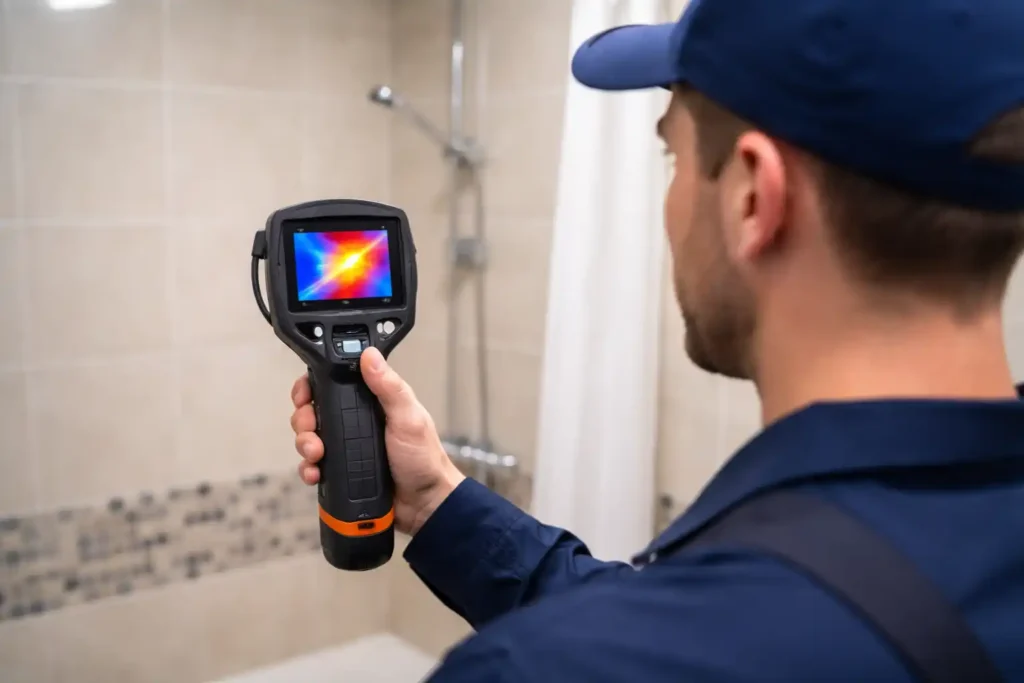
- Thermal Imaging Cameras: A leak changes the temperature profile of your walls or floors. Thermal cameras reveal the coolest (wettest) spots, showing hidden leaks behind tiles or drywall. Kenmore technicians often use them to spot water trails you can’t see. It’s like having X-ray vision for your plumbing!
- Tracer Gas Detection: Specialists sometimes pump a harmless gas (like helium) into lines; if there’s a crack, the gas escapes and gets detected above ground. This method finds leaks with incredible precision, especially for underground pipes.
- Smart Leak Detectors: You can even get smartphone-friendly leak sensors for your home. These battery-operated gadgets go by sinks, behind hot water units or beside toilets. If they sense water, they ping an alert to your phone – and some even shut off the water automatically.
- Video Pipe Cameras: A tiny camera on a snake-inspection tool can be sent through drains and pipes. Plumbers in Kenmore use CCTV inspection to see inside without tearing up gardens. They literally film the inside of your sewer to find cracked pipes or blockages.
Using these high-tech tools, Leak Detection Specialists Kenmore often find leaks with minimal disruption. No need to jackhammer entire floors – just a small drill hole or two and boom, they’ve got it. Many local pros even guarantee a “no leak, no fee” policy: you only pay when they find the leak. That means fewer surprises and more peace of mind for you.
DIY Leak-Check Checklist
While the pros have fancy gear, you can do a lot with simple checks. Here are quick DIY tests to try now and then:
- Water Meter Test: As mentioned, shut off all taps/appliances and jot down your meter. Check it again after an hour. Movement = leak.
- Toilet Test: Remove the toilet tank lid and drop some food coloring into the tank. Wait 15-20 minutes without flushing. If color seeps into the bowl, the flapper (rubber seal) is leaking. A common culprit, and it’s an easy fix.
- Faucet Inspection: Look under sinks for wetness and listen for drips. Even a slow drip adds up. Often it’s just a worn washer. As one guide notes, replacing a single tiny rubber washer can stop a drip and save heaps of water.
- Outdoor Checks: Walk around your property after watering or rain. Are sprinkler heads spraying sideways? Are hose spigots dripping? Check pool fill systems (mark the water level and re-check in a day). A running sprinkler at night can quietly waste thousands of litres.
- Appliance Hoses: Examine hoses on washing machines, dishwashers and hot water systems. These rubber hoses can crack with age. Consider replacing them every 5–10 years as preventative care.
By doing these periodic checks, you can spot small leaks before they become big. For example, cleaning or replacing a worn faucet washer is a few minutes of work – but ignoring it might cost you hundreds of dollars of water waste over a year
When to Call the Pros (Emergency Plumbing Service)
Got a trickle that’s becoming a torrent? Sometimes DIY isn’t enough. If you suspect a major leak (think flooding, burst pipe, or steady streaming water), it’s time to call an emergency plumbing service-or even trusted Leak Detection Specialists Kenmore for accurate diagnosis. In Kenmore, local plumbers are on call 24/7 for just these nightmares.
Why leave it to pros? For one, they’re lightning fast. A reputable plumber Kenmore will shut off the main and fix it swiftly, saving days of water damage. Plus, they see hidden leaks where we can’t-just like experienced Leak Detection Specialists Kenmore who use advanced tools. Remember the saying: the cure is often more expensive than prevention. A specialist with a video camera can pinpoint a pipe crack under your slab without digging up your whole yard. That expertise means far less invasive repairs.
Also, Kenmore plumbers know local quirks: Queensland codes, water meter rules and even which soils might corrode pipes fastest. Many are licensed Master Plumbers, so they back their work with guarantees. According to the Queensland Government, once you detect a leak, you should “contact a licensed plumber to identify and take the necessary steps to repair it”.
Remember: you don’t have to panic over every drip. For slow or suspected leaks, try a few tests first (as above). But if your water bill is skyrocketing or you see obvious flooding, don’t hesitate. As the pros say, “if your house is getting wet… get on the phone.” A qualified local emergency plumber will appreciate the info you’ve gathered (meter readings, photos, etc.) and can jump right to fixing the issue.
Table: Quick Leak-Check Guide
| Check Item | Why It Matters | How Often |
|---|---|---|
| Water Meter (with all taps off) | Detect unseen leaks (meter shouldn’t move) | Monthly |
| Toilet Flapper | A leaky flapper quietly runs water nonstop | Every 3–6 months |
| Faucets & Hoses | Drips and old hoses = wasted water | Quarterly |
| Outdoor Irrigation System | Sprinkler leaks or overspray often go unnoticed | Seasonal (pre-summer) |
| Hot Water & Cooling Systems | Relief valve drips or tank leaks can sneak up on you | Annually (or before summer) |
| Roof/Gutters | Clogged gutters can lead to wall leaks (especially in storm season) | Annually, before wet season |
Smart Prevention Habits
Once that leak is fixed, let’s keep the party crashes away for good. Here are pro tips to stay leak-free:
- Smart Prevention Habits
Once that leak is fixed, let’s keep the party crashes away for good. Here are pro tips to stay leak-free—many of which are recommended by Leak Detection Specialists Kenmore. - Regular Kenmore Plumbing Inspections: Schedule an annual check with a plumbing services company. A licensed plumber can sniff out minor issues – loose joints, worn seals, early corrosion – before they turn into leaks.
- Know Your Shutoff Valves: Make sure you know exactly where your main water shut-off valve is (often near the meter). In an emergency, turning off the water fast is critical to minimizing damage. Label it or get a tag so anyone can find it.
- Mind the Meters: Kenmore residents should glance at that water bill and meter frequently. Trends are your friend: a slight uptick in use often hints at a tiny drip – catch it early. You can even install a real-time leak detector that alerts your phone.
- Sprinkler Smarts: Use water-saving nozzles and check sprinklers regularly. Over-saturated spots of grass or ponded water are clues to leaks. Also, try rainwater tanks or smart irrigation controllers common in Brisbane to avoid over-watering.
- Insulate & Protect Pipes: Kenmore rarely freezes, but hot summer days can stress pipes, especially those in crawl spaces. Insulating exposed pipes can prevent cracks. Also, avoid planting trees near underground pipes (tree roots are notorious for causing leaks).
- Be Water-Wise: Finally, cultivate everyday habits: turn off taps fully, fix drips promptly, and choose efficient fixtures. Even small changes add up – remember, a trickle every second wastes thousands of litres a year. In fact, water experts point out that timely leak detection “promotes water conservation and saves on bills”, a principle strongly supported by Leak Detection Specialists Kenmore. Every drop counts, as our Kenmore community strives to be waterwise.
Conclusion: Peace of Mind Watered Home
Hidden leaks are like that annoying houseguest who overstays their welcome – they cause damage quietly and cost you dearly if not evicted. By staying vigilant for the signs (high bills, damp patches, drips) and doing simple tests yourself, you can catch many leaks early. But when in doubt, lean on the experts. Leak Detection Specialists Kenmore are armed with the gear and know-how to find even the craftiest leaks without tearing up your place. They won’t just fix the drip – they’ll protect your home’s health and your wallet.
Investing in a professional leak check is really investing in peace of mind. You’ll sleep easier knowing your Kenmore home is safe, you’re not literally throwing water (and dollars) away, and you’re doing your bit for water conservation. As one plumbing pro puts it, the goal is simple: stop leaks before they start. So take a minute today to walk through your home. Check that meter, replace a worn washer, or shoot a quick text to a trusted plumber Kenmore if something seems off. Your friendly local emergency plumber or Leak Detection Specialists Kenmore will thank you for the heads-up. After all, the best leak is the one you never had.
Frequently Asked Questions
Q: What exactly does a leak detection specialist do?
They’re like plumbing detectives. They use gadgets like acoustic sensors, thermal cameras and cameras-on-a-cable to pinpoint hidden leaks in walls, pipes or the ground. The result? Fast, precise fixes without needless digging or guessing.
Q: Should I try finding the leak myself or call a professional?
You can do basic checks (watch the meter, test toilets, inspect faucets) but leave tough cases to the pros. If you’ve spotted signs (big bills, mold, damp walls) and can’t locate the source, a licensed Kenmore plumber will save time and water by finding the leak quickly and accurately.
Q: When is a leak an emergency requiring a plumber Kenmore?
If water is gushing (burst pipe, floor flooding, or major structural wetting), call an emergency plumber immediately. For slow/small leaks, you have a little time to check things, but if you notice steady drips or rising bills, don’t delay. In Kenmore, local 24/7 plumbing services can get to you fast and stop the damage.
Q: How do blocked drain solutions fit into leak prevention?
Clogged drains can pressure the system and even lead to pipe bursts. Clearing blockages (using hydro-jets, snakes or camera-guided methods) keeps drains flowing and pipes healthy. Many Kenmore plumbers offer blocked drain solutions as part of their services to prevent backup-related leaks.
Q: How often should I get a leak detection check?
It’s wise to inspect your home’s plumbing yearly or whenever you sell/purchase property. Many pros recommend an annual maintenance check. That way, even slow-developing issues (corrosion, wear) are caught early, keeping your home leak-free long-term.