Turning on your kitchen tap in Kenmore, QLD, you expect water that is safe, clear, and reliable. And in most cases, it is. Local tap water, sourced mainly from Mt Crosby and treated under strict Australian drinking water standards, meets national safety guidelines. However, safety does not always mean optimal quality. Many households notice chlorine taste, mineral buildup, or concerns around trace contaminants such as PFAS, which have been detected in very small amounts in parts of South East Queensland.
This raises an important question for homeowners and businesses alike: does installing a water filtration system actually improve water quality? The answer is yes. A professionally planned Water Filtration System Installation in Kenmore can significantly improve the taste, clarity, and overall quality of your water by reducing unwanted chemicals, sediments, and other impurities before they reach your tap.
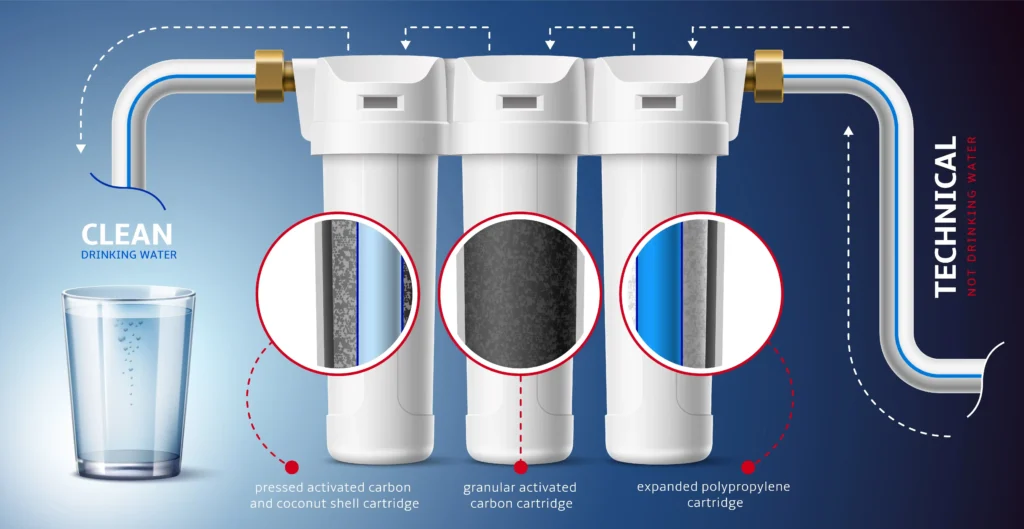
including activated carbon and polypropylene filters producing clean drinking water
In real-world use, water filtration systems help transform treated mains water into a cleaner and more consistent supply for drinking, cooking, and daily use. This article explains how water filtration works, why many Kenmore residents choose to install these systems, what contaminants are commonly reduced, and how proper installation directly affects performance. By the end, you’ll understand why Water Filtration System Installation in Kenmore is not just a plumbing upgrade, but a practical step toward better water quality and healthier everyday living.
Understanding Kenmore’s Tap Water
Kenmore sits in Brisbane’s western suburbs, drawing from the same reservoir network as much of SE Queensland. Our water meets national health guidelines – which means it’s technically safe – but it isn’t flawless. Seqwater (our water authority) upgrades pipelines regularly, sometimes causing tap water to “taste and smell slightly… chlorinated” during maintenance. In fact, Seqwater stressed that even when locals in Kenmore Hills got extra chlorine after a valve replacement, the tap water was still “completely safe to drink”. So yes, the tap is safe – but do you want to taste chlorine every time?
Beyond chlorine, Brisbane adds fluoride (~0.6–0.8 mg/L) to prevent cavities. Many Kenmore folks accept fluoride’s dental benefits, but others prefer not to drink it. Local headlines even reported PFAS “forever chemicals” at Mt Crosby at ~36 ppt – low by Aussie rules but above emerging US limits. Seqwater insists all levels are under the Australian Drinking Water Guidelines (ADWG), and new ADWG limits (e.g. 200 ppt for PFOA) are on the way. Still, community pressure and media coverage make many residents curious about extra protection.
In short, Kenmore’s supply is clean but not pristine. Common issues include:
- Chlorine taste/odour: Used to kill germs, but you might detect it at the tap.
- Fluoride: A health trade-off (dental benefits vs. personal preference).
- Minerals: Calcium and magnesium make water “hard,” which can cause scale on kettles.
- Sediment or rust: Rare, but small particles from old pipes can cloud water.
- Potential contaminants: Trace heavy metals (lead or copper from plumbing), and emerging contaminants like PFAS.
Even if levels are below harmful limits, people still want better taste and safety. As the CDC notes, “water filters can improve the taste of water, the safety of water, or both”. In Kenmore, installing a filter is an extra step for peace of mind and quality.
Benefits of Water Filtration System Installation in Kenmore
You’ve heard the sales pitch, but what actually improves? A water filtration system installation in Kenmore can bring several tangible perks:
- Great taste and smell. The most immediate change is flavour. Filters (especially activated carbon ones) scrub out chlorine and organic chemicals that give tap water that “pool” or “earthy” taste. Many Kenmore residents report their coffee and cooking water suddenly tasting “fresh” post-installation.
- Reduction of contaminants. Beyond flavor, filtration can remove harmful stuff. Heavy metals like lead or copper (from old pipes) are often reduced by carbon filters. Sediment (rust or sand) is caught, leaving water clear. Advanced systems like reverse osmosis (RO) go even further: they remove fluoride (up to ~90% removed), arsenic, nitrates and PFAS. In fact, health agencies confirm that filters with activated carbon or RO membranes are effective at removing PFAS from drinking water. (Minerals like calcium remain unless you install a softener.)
- Health & convenience. Cleaner water means less chance of ingesting trace toxins. While Brisbane’s tap already meets guidelines, extra filtration can benefit those with weakened immune systems or infants. Even if your water is “safe”, the CDC advises you to test your water and choose a filter for any germs or chemicals you are concerned about. Many Kenmore families simply sleep better knowing lead and other nasties won’t end up in their tea. Plus, no more lugging heavy bottled water – every tap delivers crisp water on demand.
- Protects appliances and plumbing. Hard minerals and sediment can build up in kettles, shower heads and washing machines. A whole-house filter or softener can prevent scale, extending appliance life. (Just note: a softener removes hardness minerals but not contaminants like lead or PFAS.)
- Environmental impact. Less bottled water means fewer plastic bottles and lower carbon footprint. For an eco-minded crowd, this is a sweet bonus.
- Local trust & standards. Many customers say a professionally installed system gives confidence. Urban Utilities (Brisbane’s water utility) uses top-tier treatment, but adding a final filter at your house is like double-checking the work. It shows you care about home water quality in Kenmore specifically.
In summary, a Kenmore resident who invests in a water filtration system installation often enjoys tastier, safer water. It’s about elevating what’s already safe to exceptional.
How Water Filtration Systems Improve Tap Water Quality
Water filters come in different flavors (pun intended!), but they generally work by trapping or transforming bad stuff as water flows through. Here’s how popular systems change your water quality:
- Activated Carbon Filters: The workhorse of many home filters. These are typically charcoal blocks or granules. As water passes through, carbon’s porous surface adsorbs chlorine, volatile organic compounds (VOCs) and many chemicals that cause taste/odour issues. The EPA notes GAC filters can achieve “high removal efficiencies (up to 99.9%) for many VOCs”. In practice, carbon filters do dramatically reduce chlorine and organic tastes, leaving water much “cleaner” on the palate.
- Reverse Osmosis (RO) Systems: RO pushes water through a very fine membrane, removing nearly everything larger than a few nanometers. This means almost all dissolved minerals and contaminants get left behind. An RO filter will strip out fluoride (reducing ~90%), lead, arsenic, nitrates and even most PFAS. The trade-off: RO water is very “flat” (since healthy minerals are also removed), and the process wastes some water. Many Kenmore homes use RO under the sink for drinking water, often with a remineralizer afterward.
- Sediment Filters: Often the first stage in any system, these are simple filters (like mesh or pleated cartridges) that trap rust, sand and dirt. They don’t “purify” by chemistry, but they keep your water clear and protect finer filters downstream.
- UV Purifiers: An extra layer for germ-killers. UV lamps can sterilize bacteria and viruses in water but do not remove chemicals or particles. In Kenmore, UV is rarely needed for mains water (our public water is disinfected), but it’s an option for tanks or well-water. UV ensures no live microbes survive, improving biological safety.
- Ion-Exchange (Water Softeners): Technically not a “purification” filter for contaminants, softeners swap hardness minerals (calcium, magnesium) for sodium or potassium. This protects plumbing from scale but does not remove chlorine, metals or PFAS. It’s often sold together with filtration, so be clear: water softeners and carbon/RO filters serve different roles.
The table below summarizes what each type commonly removes and how it’s used:
| Filter Type | Removes (Example Contaminants) | Typical Use |
|---|---|---|
| Activated Carbon | Chlorine (taste/odour), VOCs, some heavy metals (like lead) | Under-sink units, pitchers (for drinking) |
| Reverse Osmosis (RO) | Fluoride, heavy metals (lead, arsenic), nitrates, PFAS | Under-sink for ultra-pure drinking water |
| Sediment Filter | Sand, rust, silt (improves clarity) | Pre-filter in most systems |
| UV Sterilizer | Bacteria, viruses (no effect on chemicals) | Point-of-entry (whole-house) or filter tap |
| Water Softener (Ion-Exch) | Calcium & Magnesium (scale); does not remove contaminants | Whole-house; prevents scale in pipes/appliances |
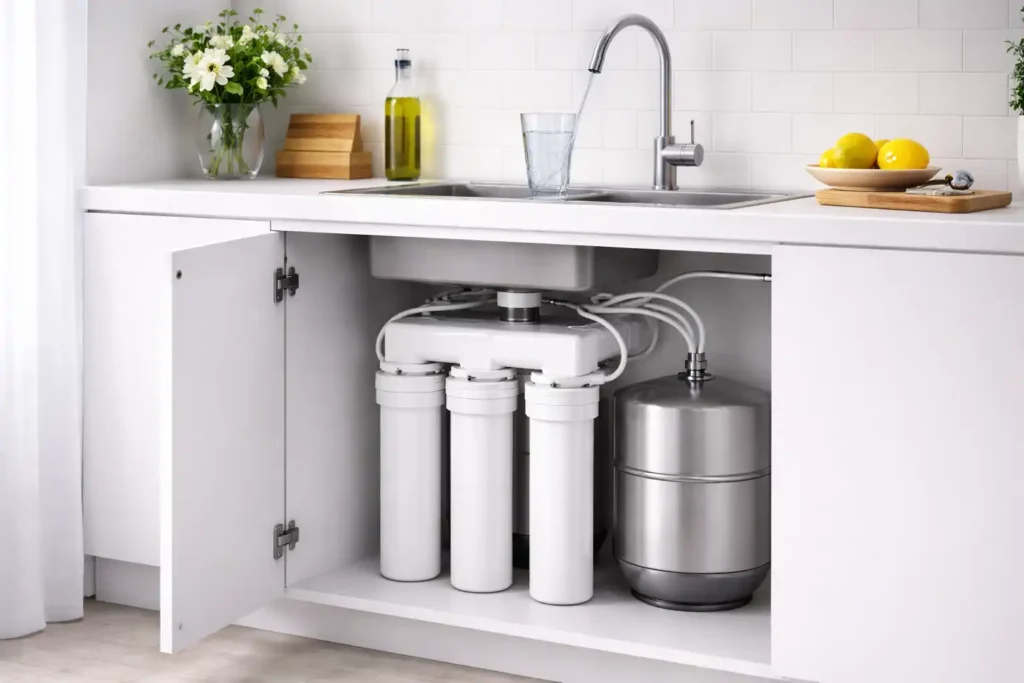
Each filter type affects your water differently. For example, an RO system will give you crystal-clear water free of almost everything – great for drinking, but you may miss the “minerally” taste of tap. An under-sink carbon filter will make water taste and smell excellent, but it won’t touch microorganisms. Many Kenmore households combine types: e.g. a sediment filter + carbon + RO under the sink for drinking, plus a carbon whole-house filter for showers.
The installation itself is key. Poorly installed systems can leak, flow too slowly, or even introduce contaminants (like germs in a neglected filter). Hiring a pro for your water filtration system installation in Kenmore ensures tight plumbing and correct setup. For instance, if a whole-house filter strips chlorine from all taps, the plumber should advise you on maintenance, because “without chlorine, more germs may grow in your plumbing”. In short, a good installation maximizes removal of bad stuff and keeps water healthy as it flows through new equipment.
Installation Process and Maintenance
Getting your new filter online involves a few steps: testing, selection, install, and upkeep.
1. Test your water. Before anything, find out what’s actually in your Kenmore water. Your local council (Urban Utilities) provides a yearly water quality report; it’s wise to check it. You could also use a home test kit or hire a lab. Testing reveals if you have issues like high lead, nitrate or PFAS. Armed with results, you can choose the right filter. (The CDC recommends exactly this: “Test your water and choose a filter that removes the harmful germs or chemicals you are concerned about”.)
2. Choose the system. Based on your needs and budget, pick a system. As an example, if your water tastes fine but you want fluoride gone, an RO system is ideal. If you mainly want to avoid chlorine taste and sediment, a carbon block or UV may suffice. Look for NSF-certified products (there are NSF standards for removing lead, chlorine, etc.), and buy models sized for your home’s water usage.
3. Professional installation. For whole-house systems or multi-stage setups, we strongly recommend a licensed plumber. They’ll install it at the correct point (often near the main water line or under the sink), ensure proper fittings, and flush the system. Even “DIY” under-sink kits often require drilling or complex connections. A pro will also test pressure drop – some filters reduce flow, so they might adjust pipe size or add a booster pump. In Kenmore’s humid climate, the installer will ensure indoor equipment is safe from mold or freezing.
4. Initial flush and check. After installation, you’ll flush a few tankfuls of water to clean out any loose carbon dust or installation debris. Make sure to taste and smell the water after this; it should already be markedly better.
5. Maintenance routine. A filter is no “install and forget” product. Cartridges and membranes must be replaced per manufacturer’s schedule (typically every 6–12 months for carbon, 2–3 years for RO membranes). The CDC cautions that filters “will lose their effectiveness over time” if not changed. Also, wear gloves when changing filters and wipe fittings to avoid bacterial growth. Some systems also need annual disinfection or lubrication. Factor these ongoing tasks into your decision – a cleaner home might still need a cleaner filter!
6. Retesting water. After a few months, it’s smart to test your water again. You’ll likely find contaminants like chlorine or lead are now below detectible levels. In fact, water filters are so effective that top-tier filters are often NSF/ANSI certified to remove a certain percentage of specific contaminants. Look at the label of your filter for what it’s certified to do (NSF-42 for chlorine/taste, NSF-53 for lead, etc.).
On a budget? If you’re doing a partial job (like just a carbon pitcher or faucet-mount filter), the installation is trivial – just attach and go. But remember that even simple filters need periodic cartridge swaps. Keep an eye on water flow: if it slows or starts to smell/look bad, it’s time for maintenance.
Local Impact: Kenmore Water Quality After Installation
So what’s the real-world effect in Kenmore homes? Many locals report they instantly notice a “freshness” in the water. Coffee or tea tastes cleaner, soup or pasta water is clearer, and even ice from the freezer smells neutral instead of faintly chlorinated. If you fill a glass, you may see it’s extra clear – no little brown specks that sometimes float in untreated tap water.
On the metrics side, here’s a typical before/after from a home test (values are illustrative):
- Chlorine: Reduced from ~0.5 mg/L (treats with chlorine) to 0.0 mg/L after carbon filtration.
- Lead: If any was present (say 5 ppb from old pipes), an NSF-certified filter may drop it to <1 ppb.
- Fluoride: Unchanged by carbon; but an RO system would cut it by ~90%.
- PFAS: Once a rare reading of 20 ppt (parts per trillion) might go below detection with carbon/RO.
In effect, water often goes from “just within guidelines” to “well below any safety threshold.” Having independent removal of contaminants feels like a personal assurance. It affects water quality by taking it from “good” to “great.”
One caveat: a few people notice “softer” water (due to scale removal) tastes different – it can seem too bland. That’s why some RO systems add back a pinch of minerals (called remineralizing) for taste. Also, because filters stop chlorine, your shower water might not be disinfected. This isn’t usually a problem (your skin and soap will handle it), but it’s why plumbers warn about bacterial growth if you strip all chlorine out of a house. The fix is simple: don’t overshoot. You generally only need to filter your drinking water thoroughly.
On balance, most Kenmore residents say the benefits outweigh any quirks. As one local blog put it, after installation “Tap water once tasted like metallic lemonade – not pleasant” and now it’s “fresh and crisp”. In other words, Water Filtration System Installation in Kenmore often feels like an upgrade in lifestyle, not just plumbing.
Summary and Call to Action
Installing a water filter system is a down-to-earth way to upgrade everyday life in Kenmore. You’re not just saving on bottles – you’re treating your water to a mini spa day. The water filtration system installation in Kenmore will eliminate the chlorine twang, rinse out grit, and guard against contaminants both old (lead, fluoride) and new (PFAS). In doing so, it boosts taste, protects health, and gives you real confidence in every sip you take.
Ready to experience the difference? Start by checking your most-used tap: is the water inviting? If not, consider a filter. Professionals in Brisbane and Kenmore can recommend systems tailored to your needs. And remember – whether it’s a simple under-sink unit or a whole-house solution, regular maintenance (filter changes and service) is key to keeping that water quality sky-high.
After all, in Kenmore we care about a good brew and a safe shower. A well-installed filtration system delivers both. Drink up!
FAQs
What does a water filtration system installation in Kenmore do?
It removes impurities (chlorine taste/odour, metals like lead, sediments, and some chemicals) from tap water, improving taste and safety.
Do I really need a filter if Kenmore water is safe?
Kenmore tap water meets safety guidelines, but filters are about extra quality. They give peace of mind and often better taste. CDC notes filters “improve taste or safety” of water.
How often should I replace the filter after installation?
Follow the manufacturer’s advice – typically every 6–12 months for carbon cartridges, or every 2–3 years for membranes (RO).
Can filtration remove fluoride or PFAS from Kenmore water?
Yes, certain filters (RO, activated alumina, etc.) can greatly reduce fluoride, and carbon/RO filters are effective for PFAS. Standard pitchers won’t remove these.
What’s the difference between under-sink and whole-house filters?
Under-sink (point-of-use) filters serve one tap (drinking water), are cheaper and easier to install. Whole-house (point-of-entry) filters treat all water in the home (showers, laundry, etc.) and cost more but protect plumbing from scale and contaminants everywhere.
Is it worth getting a professional installation in Kenmore?
Definitely. A pro will ensure proper setup (no leaks, good pressure) and educate you on maintenance. A well-installed system guarantees you get all the benefits without headaches.